Security-Widefield Basement Water Removal
Water at the bottom of the stairs creates an access problem before cleanup can begin. Security-Widefield basement removal evaluates hazards, the source and affected contents, then addresses water held behind finished walls and beneath floor coverings.
(888) 532-8620Assess the wet lower level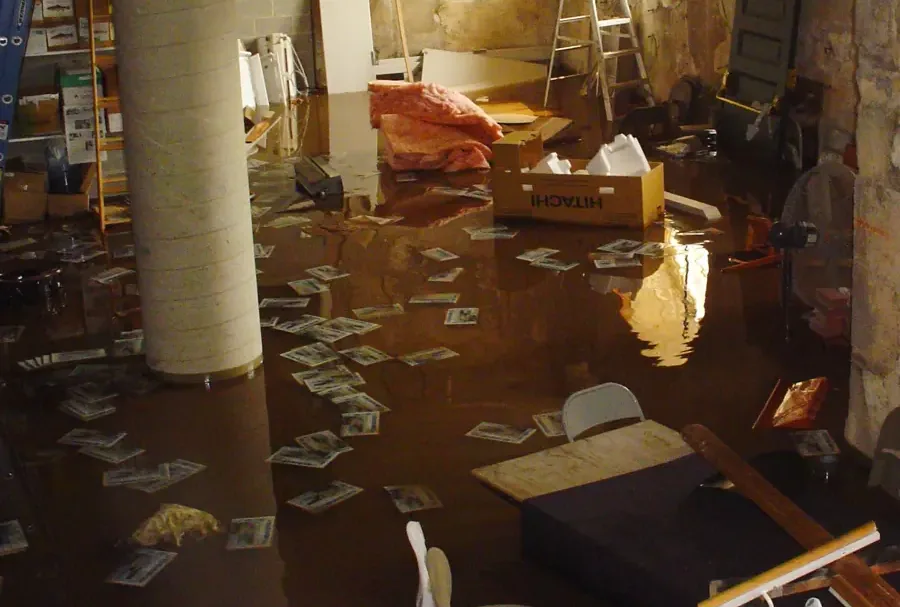
First steps for basement water removal
- Assess access before using the stairs
People should stay out of standing water around electrical equipment or unstable contents. Observation from the upper doorway can provide useful information until entry conditions are evaluated.
- Describe the apparent incoming water
The initial report should identify water rising through a drain, leaking from equipment or entering at a building opening. The source determines important cleanup and plumbing decisions.
- Pause fixtures during a backup
If wastewater is rising, avoid sending more water into drains or toilets. A plumber and the appropriate district can investigate the property drainage and possible main sewer concerns.
- Preserve a contents condition record
Safe photographs should show stored items and wall contact before removal changes the room. Boxes, furnishings and finish materials each need their own cleaning or disposal assessment.
The first view from the stairs may show floating storage items or water against a finished wall. Entering that space requires attention to electrical equipment, unstable contents and the water source. Removal should follow an assessment of those conditions, especially when the lower level contains occupied rooms or utility equipment that the household normally uses.
What does basement water removal cost in Security-Widefield, CO?
Basement water removal costs in Security-Widefield depend on safe access, water condition and damage to finished lower level assemblies. The estimate should distinguish pumping from contents handling, contaminated material removal, cleaning and the drying that remains after standing water clears.
- Open collection area
- Straightforward removal access
- Focused lower wall checks
- Wet partition bases
- Affected floor coverings
- Broader contents handling
- Restricted equipment access
- Extensive contacted materials
- Expanded cleaning needs
Water category, affected area, material class and delay before drying change the scope.
Source correction and reconstruction may require separate agreements. These planning ranges are not quotes. Compare the inputs in the water damage cost calculator.
How the basement water removal work progresses
The IICRC S500 drying standard ties equipment decisions to material measurements. The project record tracks the source, removal choices, daily conditions and the final moisture comparison.
- 01
Establish entry conditions and source behavior
The survey checks electrical concerns, access and water origin before equipment selection or contents removal through the stairs.
- 02
Remove water and evaluate contents contact
Extraction clears accessible collection areas while affected belongings and porous finishes receive documented cleaning or disposal decisions based on their condition and the water they contacted.
- 03
Expose and dry retained perimeter materials
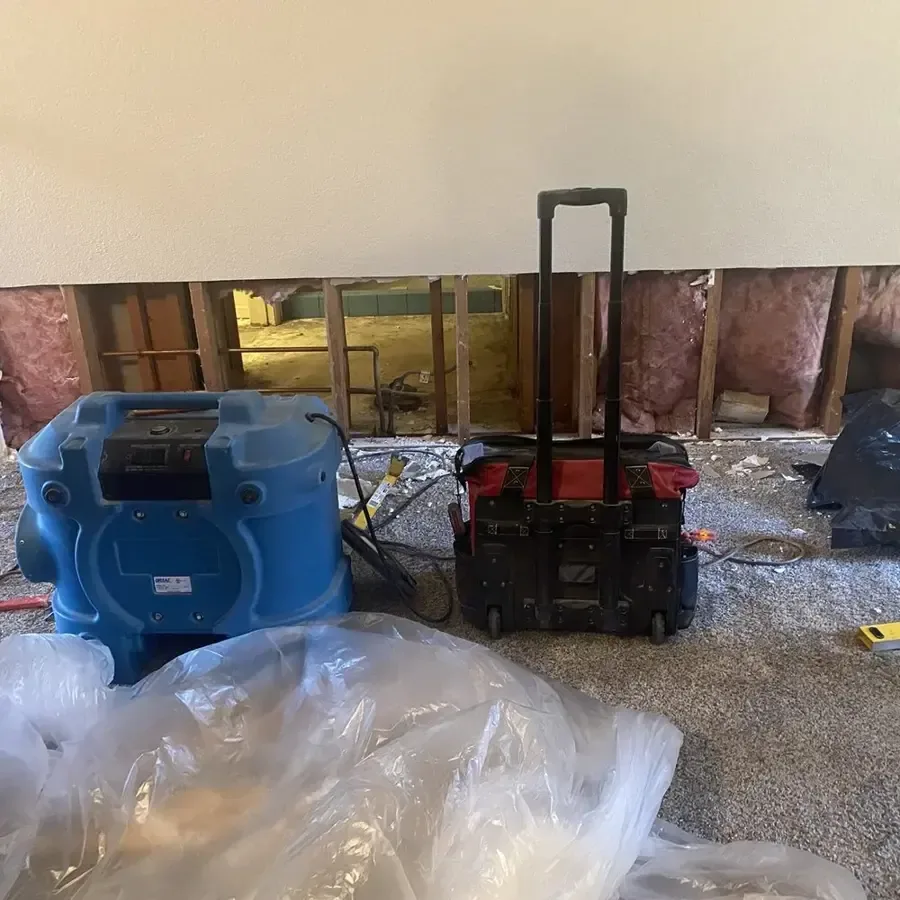
Wall bases, closets and floor transitions receive targeted inspection. Necessary openings allow remaining framing and substrate to dry under a monitored equipment plan suited to the lower level.
- 04
Prepare the storage and occupancy handoff
The record identifies completed source work, retained material readings and outstanding repairs, giving the household a practical account of when the affected basement areas can return to use.
Consider the drainage system early
Widefield Water and Sanitation District identifies homes with basements as more susceptible to sewer backups. For a basement in Widefield, rising water through a drain or fixture therefore deserves a drainage investigation alongside the indoor cleanup assessment. The district advises stopping water use into drains while a clog remains.
Security lies northwest of Fontaine Boulevard by local convention. A property report can use that location context while giving more specific indoor details: the affected stair access, lowest fixture and where water is still entering. Grinnell can also help describe the property location without determining which source caused the loss.
Separate stored contents from the building scope
- Water against cardboard boxes can affect contents beyond the visible outer surface.
- Finished wall bases may conceal wet backing and insulation above the floor puddle.
- Floor coverings can hold moisture or residue against the underlying surface after pumping.
- Equipment and utilities in standing water need appropriate assessment before use or handling.
A basement that has been pumped out still needs a cleaning and moisture plan. Water origin determines how contacted materials are evaluated. A drain backup requires different handling from a recent contained supply leak. The inspection should describe the actual contact boundary and record decisions about porous finishes and stored items before the room is rearranged for drying equipment.
Check the finished perimeter after removal
Lower wall edges, closets and partition intersections often need closer inspection because water can collect where access is limited. Selective openings may expose wet layers behind an apparently intact finish. Retained structural materials then become part of a measured drying scope.
Where the source is wastewater, sewage cleanup explains the contact and cleaning work involved. The final basement handoff should connect the source correction, contents decisions and moisture results so storage and occupancy resume with a clear account of remaining repairs.
Basement water removal service area
Basement assessments cover properties with lower levels in Security and Widefield. Fontaine Boulevard and Grinnell help describe location, while the actual stairs, fixtures and finished assemblies determine the safe access and cleanup plan.
The same service nearby: basement water removal in Fountain, Stratmoor, Colorado Springs.
Water damage restoration in Security-Widefield · every town covered
Basement Water Removal questions in Security-Widefield, CO
Should someone enter to unplug wet equipment?
Standing water around electrical equipment requires professional assessment. Occupants should remain outside the affected space rather than enter the water to handle plugs or controls.
Why does the district mention basements?
Widefield Water and Sanitation District describes homes with basements as more susceptible to backups. Actual drain behavior still needs investigation at the affected property.
Is pumping the final step in a finished basement?
Pumping clears collected water. Finished walls, floor layers and contents can remain wet or contaminated, requiring further assessment, cleaning and drying after the floor becomes visible.
What if several neighbors also report backups?
That pattern should be reported to the district because it can indicate a main sewer problem. The property plumbing and indoor damage still need their own assessment.
Can cardboard storage boxes be kept?
Contact and condition determine the decision. Wet porous packaging can transfer damage to contents, so each affected group of items needs evaluation before returning to storage.
When should lower wall finishes be replaced?
Replacement follows necessary cleaning, suitable moisture conditions and source correction. Closing the perimeter too early can hide wet backing or insulation behind the new finish.
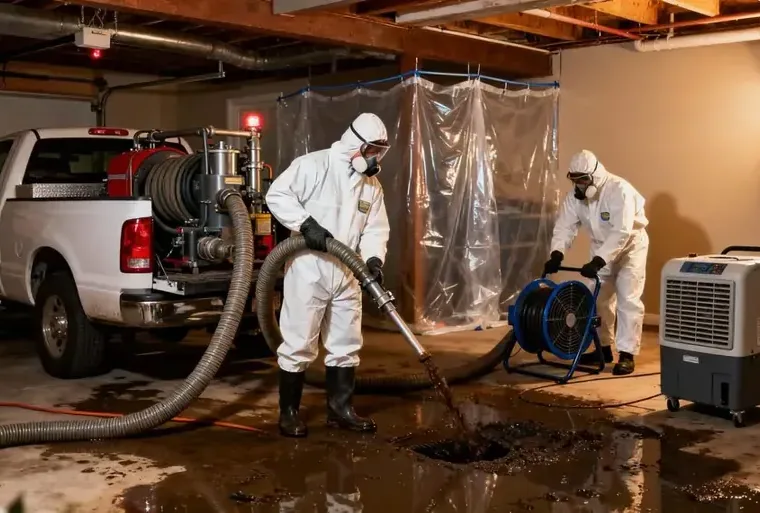
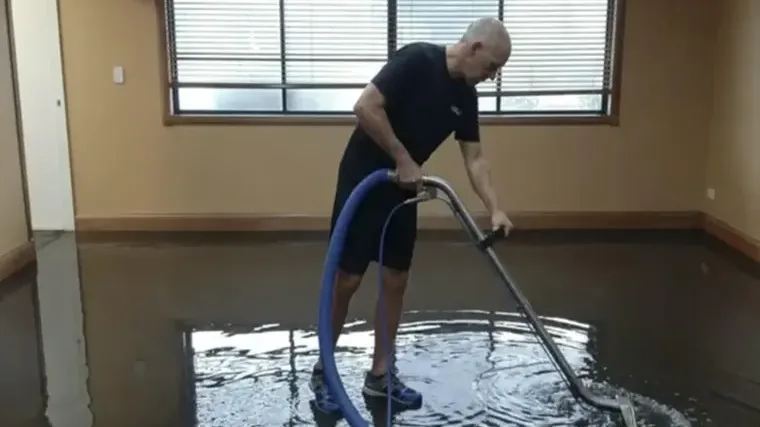
Restore the lower level beyond the visible water
A clear scope connects removal with cleaning, contents decisions and drying checks at the walls and floor layers that remain.