Commercial Water Damage in Fountain, CO
A business water loss affects access, inventory and building materials at the same time. The restoration contractor defines safe work zones, documents the damage and coordinates removal and drying around the actual occupancy conditions.
(888) 532-8620Business wet? Define the work zone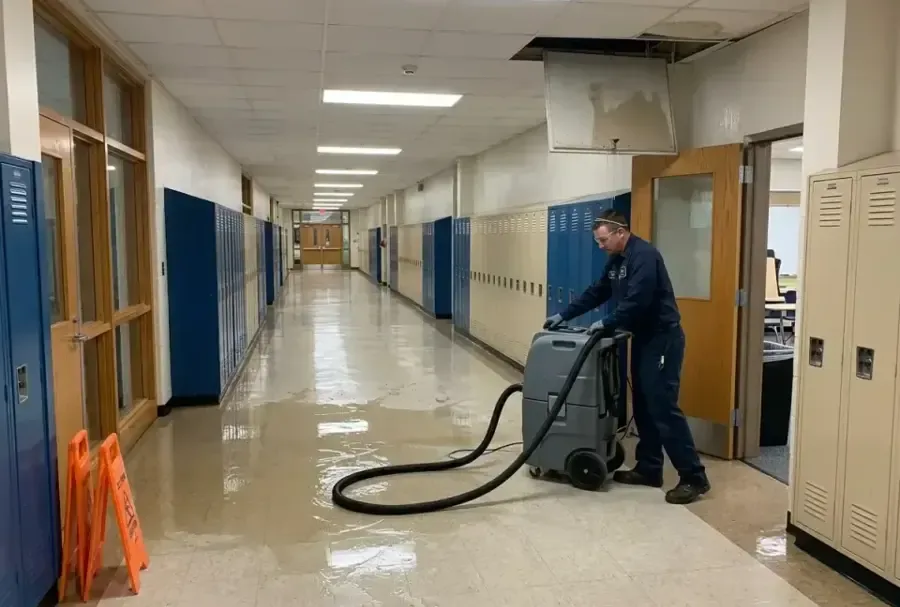
First steps for commercial water damage
- Identify the responsible property contact
Management establishes who can authorize access and emergency work, while staff report affected rooms, continuing water and any restrictions relevant to safe entry.
- Protect safe circulation
Occupants stay outside wet or contaminated areas and keep exits accessible, leaving electrical and unstable overhead conditions to the appropriate professionals.
- Document contents before movement
Photographs and location notes record affected inventory or records so necessary relocation does not erase the relationship between contents and the original water footprint.
- Coordinate neighboring occupancy
The property contact reports shared walls, corridors and lower floors that may be affected, allowing the assessment to extend beyond the first business reporting a leak.
A commercial loss may cross tenancy boundaries or affect a shared corridor before the source is obvious. The assessor identifies who controls access and who can authorize work, then records the affected rooms and contents. A clear scope keeps emergency mitigation separate from equipment repair, inventory decisions and reconstruction.
What does commercial water damage cost in Fountain, CO?
Commercial water damage restoration in Fountain often needs a planning range of $2,000 to $15,000 or more. Floor area, occupancy restrictions, contents handling and assembly complexity drive mitigation costs before equipment replacement or reconstruction.
- Defined access route
- Limited wet finishes
- Focused drying plan
- Phased work boundaries
- Contents documentation
- Expanded monitoring
- Multiple wet assemblies
- More removal coordination
- Detailed room records
Water category, affected area, material class and delay before drying change the scope.
Source correction and reconstruction may require separate agreements. These planning ranges are not quotes. Compare the inputs in the water damage cost calculator.
How the commercial water damage work progresses
The IICRC S500 drying standard ties equipment decisions to material measurements. The project record tracks the source, removal choices, daily conditions and the final moisture comparison.
- 01
Establish the work authority
The contractor confirms the property contact and access restrictions, documents the initial damage and identifies the rooms needing immediate safety or contamination controls.
- 02
Separate the affected zones
The crew organizes removal routes, protects clean areas and coordinates contents movement so extraction and demolition do not unnecessarily spread the loss through occupied space.
- 03
Dry by assembly and room
Equipment placement follows material measurements and available utilities, with repeat readings identifying which areas progress and which require another access or removal decision.
- 04
Document the recovery handoff
The final mitigation file identifies completed drying, remaining restrictions and separate repair tasks, giving property management a clear basis for coordinating the next contractors.
Commercial water damage and building access
Highway 85, Highway 16 and Interstate 25 provide useful approach references around the service area. The management contact supplies the building use, floor plan and relevant utility details during the assessment. The contractor asks the property contact about loading access, occupied rooms and restrictions before moving extraction hoses and drying equipment through the premises.
- Shared entrances need a safe path that does not cross contaminated removal work.
- Stored records and inventory require condition documentation before relocation or disposal.
- Suspended ceilings can hide wet insulation and water traveling above partitions.
- Equipment placement must account for power availability and safe circulation around occupied areas.
Commercial cleanup without an unsafe reopening promise
A business should not reopen an affected room merely because standing water has been removed. Electrical safety, unstable finishes, contamination and clear exit paths require assessment. The Ready.gov business information supports continuity planning and communication during disruption. The restoration contractor coordinates work boundaries with the responsible property contact and documents restrictions. The relevant building and safety professionals assess occupancy conditions, while the restoration record documents the moisture work and restrictions that remain.
Staff observations can help identify when a ceiling began dripping or which fixture overflowed. Those accounts support investigation but should not become an unsupported conclusion about responsibility.
Commercial drying records by room and assembly
The mitigation team labels affected rooms, maps wall and floor moisture, and records contents handled during removal. A room-by-room log helps property management understand what has dried and which areas still need monitoring. Different tenant finishes may require different testing and repair conditions.
The EPA flooded-building cleanup information supports prompt attention to wet materials. Final records should separate source correction, mitigation, contents work and rebuilding. That distinction supports insurance and management discussions without promising coverage or declaring the entire business ready for use based on one dry surface.
Commercial water damage service area
Service extends through ZIP 80817 and the Duckwood Road, Highway 85 and Highway 16 approaches. The intake details identify the affected building, safe access and water source before the restoration team plans equipment and removal.
Commercial Water Damage questions in Fountain, CO
Can a business stay open during restoration?
That depends on safe access, contamination, utilities and the affected area. A contractor should define work boundaries with management without promising uninterrupted operation for every loss.
Who authorizes work in a leased space?
The responsible parties depend on the lease and property arrangement. Management should clarify access and authorization before work proceeds; restoration does not determine lease responsibilities.
Why document inventory separately?
Contents decisions differ from building drying. Location notes and photographs help explain what became wet, what moved and what requires a separate evaluation or replacement decision.
Does removing water permit immediate reopening?
No. Electrical conditions, contamination, exits and material stability still need assessment. Management coordinates reopening with the professionals responsible for those safety conditions.
Can one room dry before another?
Yes. Assemblies and exposure vary. Room-specific readings show progress more clearly than treating the entire building as one uniform drying area.
Can commercial losses be reported after hours?
24/7 reporting supports an early account of the source, occupancy and hazards. The property contact should identify access authorization and safe entry restrictions during that discussion.
Related restoration services
Define the recovery scope before the next shift
The restoration team organizes safe removal and documented drying around the building conditions, with 24/7 commercial damage reporting.