Hardwood Floor Water Damage in Fountain, CO
Cupping and opened seams show that a wood floor has changed, but the substrate may hold the larger moisture load. The drying team measures the full assembly before choosing controlled drying, selective removal or replacement.
(888) 532-8620Wood floor changed? Measure it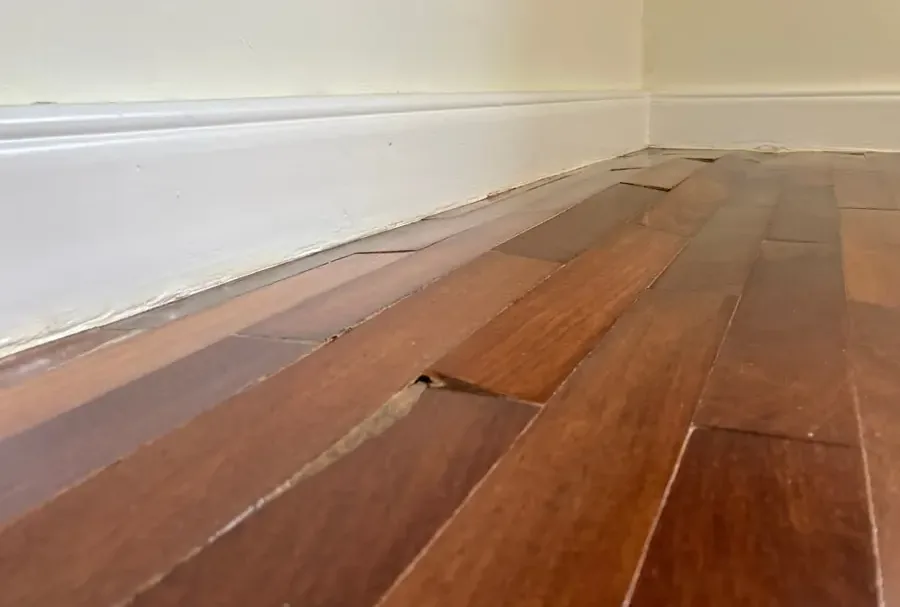
First steps for hardwood floor water damage
- Stop water before treating the finish
The household arranges source control and avoids assuming that a surface wipe resolves moisture already entering board seams and the underlying assembly.
- Avoid premature sanding
Distorted boards need assessment and stabilization before finish work, because their shape can change as the wood and substrate lose retained moisture.
- Identify loose or unsafe areas
Residents keep traffic off unstable boards and avoid wet electrical equipment while the crew establishes a safe path for inspection and extraction.
- Describe the installed assembly
Any known flooring product or installation information helps the assessor compare boards, adhesive and substrate without guessing the construction beneath the visible finish.
A hardwood floor can absorb water unevenly through its thickness. The visible board shape may continue changing after surface extraction, so early appearance alone does not determine the repair. The contractor examines the assembly, compares readings and checks whether water remains trapped beneath an underlayment or adhesive layer.
What does hardwood floor water damage cost in Fountain, CO?
Hardwood floor water damage restoration in Fountain commonly needs a planning range of $1,200 to $6,500. Area, layered construction and salvage suitability affect drying costs; refinishing, board replacement and substrate repairs may add separate work.
- Board moisture map
- Focused extraction
- Controlled humidity
- Layer-by-layer checks
- Specialty drying assessment
- Extended monitoring
- Unsuitable material removal
- Exposed substrate drying
- Repair scope documentation
Water category, affected area, material class and delay before drying change the scope.
Source correction and reconstruction may require separate agreements. These planning ranges are not quotes. Compare the inputs in the water damage cost calculator.
How the hardwood floor water damage work progresses
The IICRC S500 drying standard ties equipment decisions to material measurements. The project record tracks the source, removal choices, daily conditions and the final moisture comparison.
- 01
Map the wood response
The technician checks the visible board changes and measures the affected area against dry references, noting the flooring type and any known installation details.
- 02
Evaluate concealed water
The assessment follows moisture into the substrate and adjoining edges, deciding whether access or selective removal is necessary for a credible drying plan.
- 03
Control drying conditions
Air movement and dehumidification are adjusted to the wood assembly while repeated material readings show whether the retained layers are progressing together.
- 04
Separate drying from finish repair
The final condition record supports the flooring professional's next decision, identifying remaining distortion, damaged components and any refinishing or replacement work outside mitigation.
Hardwood assessment starts with the actual floor
Floor assessments cover homes near Hanson Nature Park, the Fountain Creek Nature Center and the Highway 16 approach. At each property, the assessor identifies the installed boards and substrate, compares moisture at wet and dry sections, and records raised edges before recommending a drying or replacement plan.
- Solid and engineered wood may react differently to prolonged wetting.
- Water can travel beneath boards beyond the visible stained or cupped area.
- A wet substrate can keep supplying moisture after room humidity improves.
- Contamination or severe loss of integrity may prevent a drying-based salvage attempt.
Hardwood water damage and safe early handling
Residents should not sand a distorted wet floor to make it appear flat. Material movement can continue as moisture changes, and premature finish work can complicate the repair. Loose boards, slick surfaces and wet electrical devices also need attention before the room is used normally. The Ready.gov household planning information supports arranging safe contacts during a loss. The restoration contractor first controls the source and water, then establishes a measured approach rather than promising that every board can be saved.
Rugs and furniture may conceal darker wet patches. Their removal should follow safe access and contamination assessment so wet contents do not spread the loss to dry flooring.
Controlled hardwood drying before refinishing
The drying team manages humidity and airflow while tracking both the boards and the layer beneath. Specialty floor systems may help when the assembly permits them, but equipment cannot restore a structurally failed or contaminated component. The plan needs a documented reason for retaining or removing each affected area.
The EPA wet-material cleanup information supports prompt attention to water damage. Final measurements and physical condition inform the flooring professional's repair decision. Refinishing, board replacement and substrate work are separate from extraction and drying, and the household should receive a clear account of which tasks remain.
Hardwood floor water damage service area
Service extends through ZIP 80817 and the Duckwood Road, Highway 85 and Highway 16 approaches. The intake details identify the affected building, safe access and water source before the restoration team plans equipment and removal.
Hardwood Floor Water Damage questions in Fountain, CO
Can every cupped floor be saved?
No. Water category, duration, board construction and physical integrity affect the outcome. The contractor should assess the assembly before proposing a salvage attempt.
Why measure below the boards?
A wet substrate can continue feeding moisture into wood after the surface looks dry. Board readings alone may miss the retained water beneath.
Should sanding happen immediately?
No. Wet wood may continue changing shape as it stabilizes. A flooring professional evaluates finish work after the moisture and physical condition are understood.
Does a dehumidifier establish floor recovery?
No. Humidity control supports drying but cannot reverse every type of material damage or contamination. The assessment defines what can reasonably remain.
What paperwork helps the assessment?
Product information, installation records and photographs before the loss can help identify the assembly. The crew still measures actual conditions rather than relying only on documents.
Can urgent floor damage be discussed at night?
24/7 intake supports reporting the source, wet area and visible board changes. Safe access and the material assessment determine the next restoration steps.
Related restoration services
Let the assembly measurements inform the floor repair
The drying team records board and substrate conditions before the flooring scope is finalized. 24/7 water damage intake is available.