Basement Water Removal in Fountain, CO
Water on a lower floor can come from plumbing, runoff or a backed-up drain. The removal crew establishes safe access and the source before extracting water and checking the enclosed materials around the basement perimeter.
(888) 532-8620Lower level wet? Assess access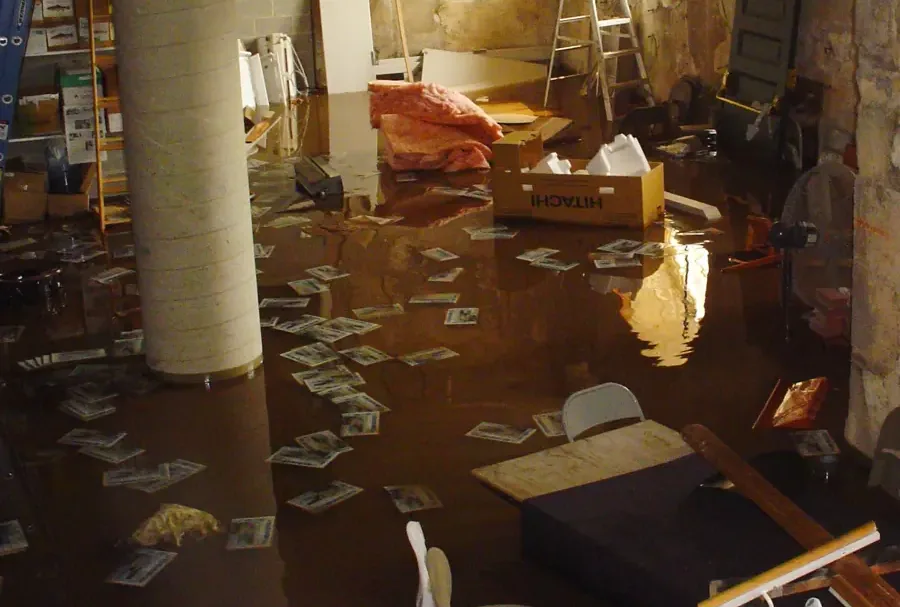
First steps for basement water removal
- Keep the stairs a safety boundary
The household stays out of standing water near utilities and reports electrical or structural concerns before anyone enters the lower level to inspect belongings.
- Describe depth and continuing entry
The intake account notes whether water is rising, draining or recurring, helping the contractor assess safe removal and whether source control remains incomplete.
- Identify the suspected source
The property contact records whether water came from a visible pipe discharge, an outside opening or an overflowing drain. That distinction helps organize source repair and the basement cleanup scope.
- Document stored contents from safety
Photos capture affected shelves, boxes and finishes only when the route is safe, preserving their condition before extraction and controlled contents movement begin.
A basement can collect water from a source above it or from outside the structure. Before pumping, the contractor evaluates access, utilities and any structural concern associated with the water level. The cleanup method then follows contamination and the materials present, not a blanket assumption that every lower-level loss is groundwater.
What does basement water removal cost in Fountain, CO?
Basement water removal and drying in Fountain commonly needs a planning range of $1,200 to $8,500. Water depth, access, contamination and finished wall assemblies determine the scope before structural repairs or source improvements are priced.
- Safe equipment route
- Focused extraction
- Perimeter moisture checks
- Wall and floor assessment
- Selective removal
- Contents coordination
- Careful removal sequence
- Broad porous material disposal
- Extended structural drying
Water category, affected area, material class and delay before drying change the scope.
Source correction and reconstruction may require separate agreements. These planning ranges are not quotes. Compare the inputs in the water damage cost calculator.
How the basement water removal work progresses
The IICRC S500 drying standard ties equipment decisions to material measurements. The project record tracks the source, removal choices, daily conditions and the final moisture comparison.
- 01
Establish safe lower-level access
The contractor evaluates utilities, depth and structural concerns before defining the removal sequence and deciding how equipment and waste can move through the building.
- 02
Remove water and assess contents
The crew extracts according to the source and conditions, checking stored items and floor edges that can conceal additional water or contamination.
- 03
Expose wet perimeter materials
Selective removal provides access to affected wall layers and floor assemblies while the drying team identifies what can remain under the contamination assessment.
- 04
Verify the lower-level assembly
Repeat readings track retained framing and finishes before equipment leaves, with the final scope identifying remaining source correction and reconstruction needs separately.
Basement source checks in the creek landscape
Fountain Creek, Willow Springs Ponds and the Duckwood area describe the surrounding landscape. For a building with a basement, property-specific mapping and an entry inspection help separate outside-water exposure from an indoor discharge. The assessment records the actual entry route and whether the discharge involves a supply pipe, outside water or a drain backup.
- Finished lower walls can conceal wet insulation against a foundation surface.
- Storage placed directly on the floor can absorb water beyond the visible puddle.
- Stair access can limit equipment movement and complicate a contaminated removal route.
- Water near a furnace, panel or other electrical equipment needs safety assessment before entry.
Safe basement water removal before occupancy
Residents should not walk down into water when electrical equipment may be energized. Deep flooding and suspected structural pressure require professional assessment before pumping, rather than an immediate attempt to empty the space. The Ready.gov flood safety information supports avoiding floodwater and following reentry instructions. The contractor establishes safe access and a removal sequence, while occupants remain outside unstable or contaminated areas. The lower room requires its own safety assessment even when the stairway remains dry and accessible.
Fountain Sanitation District advises stopping drain use during a backup and reporting the issue. A basement drain overflow therefore needs source investigation in addition to indoor extraction.
Basement drying beyond an exposed concrete floor
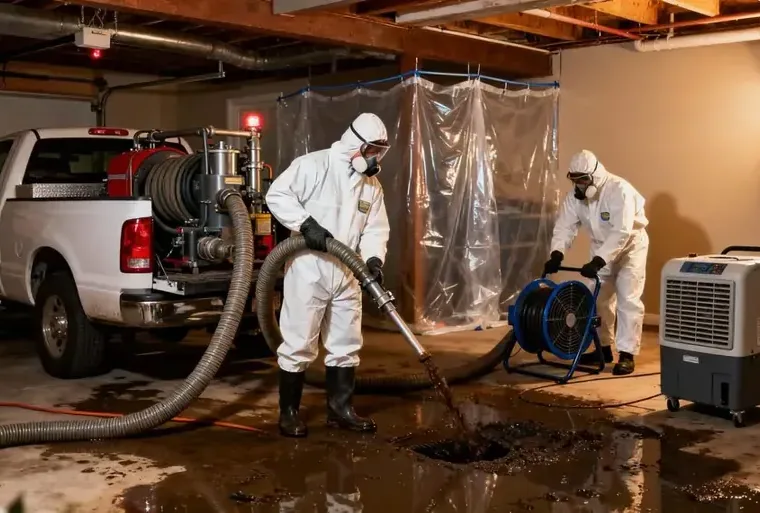
The crew extracts accessible water and checks lower wall finishes, floor coverings and contents. A bare concrete surface and a finished wall system have different drying needs. Contaminated porous materials require removal, while suitable retained framing receives measured air movement and dehumidification.
The EPA flooded-home cleanup information supports prompt assessment of wet building materials. The final record identifies material conditions at the perimeter and any remaining source-control or repair tasks. A basement that no longer has standing water may still need drying behind finishes before storage and normal use return.
Basement water removal service area
Service extends through ZIP 80817 and the Duckwood Road, Highway 85 and Highway 16 approaches. The intake details identify the affected building, safe access and water source before the restoration team plans equipment and removal.
Basement Water Removal questions in Fountain, CO
Does every basement loss come from outside?
No. Supply leaks, upstairs discharges and drain backups can collect on a lower level. The source assessment determines the cleanup category and removal approach.
Should deep water be pumped immediately?
Professional assessment is important when structural pressure or electrical hazards may be present. A removal sequence should follow the actual safety conditions rather than an automatic pumping decision.
Can concrete-looking dryness hide wet walls?
Yes. Finished perimeter walls may retain moisture behind their visible face. The technician checks the assembly instead of using the floor surface as the only indicator.
Why does storage matter to the scope?
Boxes and other absorbent contents can hold water and obstruct access to wet edges. Their condition and handling need documentation alongside the building materials.
Does creek proximity prove a property flooded?
No. A nearby water feature supplies context, not a diagnosis. The entry route and property-specific conditions establish what happened inside the basement.
Can lower-level flooding be reported overnight?
24/7 dispatch accepts the source, depth and hazard details. The household should remain outside unsafe water rather than entering the basement to gather additional information.
Related restoration services
Measure the basement after the water leaves
The restoration team checks wall layers, floors and contents before defining completion, with 24/7 reporting for active lower-level damage.