Ceiling Leak Water Damage in Fountain, CO
A ceiling stain marks where water becomes visible, not necessarily where it enters. The restoration technician checks the overhead assembly, traces the source and plans safe removal of unstable finishes before drying.
(888) 532-8620Wet ceiling? Keep clear and call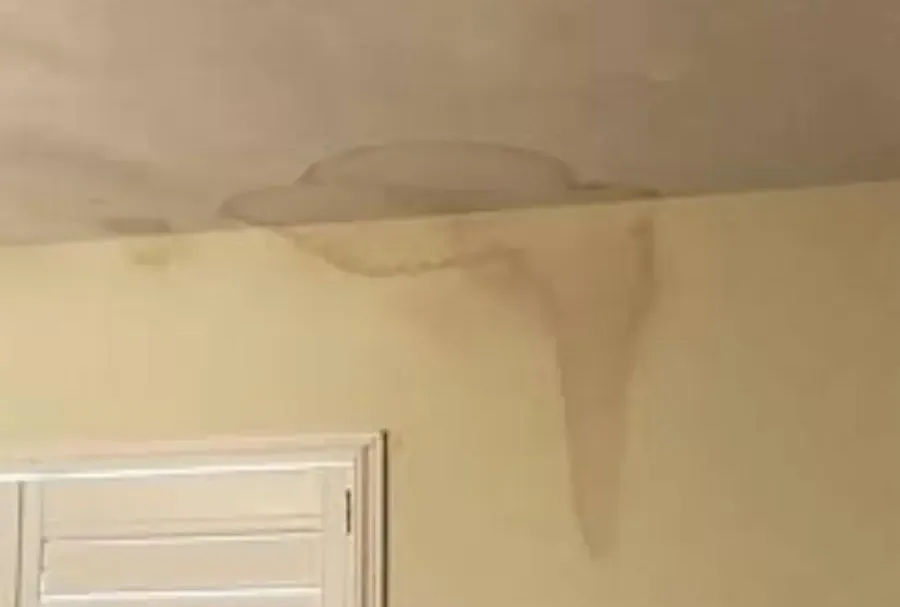
First steps for ceiling leak water damage
- Clear the space beneath damage
Residents avoid sagging drywall and hanging fixtures, moving people away from the overhead hazard instead of attempting to drain a swollen ceiling.
- Identify activity above the stain
The property contact notes nearby fixtures, recent rain and the rooms above the stain. The assessor uses those observations to trace the leak before repair work begins.
- Control electrical exposure
Wet lighting and ceiling fans need professional safety assessment before removal or powered drying equipment operates beneath the affected assembly.
- Record the spread from safety
Photos show the ceiling, adjoining walls and floor below before controlled removal changes the visible pattern and the original edges disappear.
Water can travel along a joist before dripping through the ceiling below. The assessor compares the stain with the room above, nearby plumbing and any attic space. An upstairs fixture, roof entry and condensation require different source corrections even when the visible drywall damage looks similar.
What does ceiling leak water damage cost in Fountain, CO?
Ceiling leak water damage restoration in Fountain commonly ranges from $800 to $4,500 for planning. Height, insulation, electrical coordination and the wet area affect cleanup; fixing the source and replacing finishes may add separate work.
- Source already stopped
- Limited moisture footprint
- Focused cavity assessment
- Controlled overhead removal
- Framing moisture checks
- Managed drying conditions
- Larger exclusion area
- Adjacent wall assessment
- More extensive drying logs
Water category, affected area, material class and delay before drying change the scope.
Source correction and reconstruction may require separate agreements. These planning ranges are not quotes. Compare the inputs in the water damage cost calculator.
How the ceiling leak water damage work progresses
The IICRC S500 drying standard ties equipment decisions to material measurements. The project record tracks the source, removal choices, daily conditions and the final moisture comparison.
- 01
Trace the overhead route
The technician compares surface staining with plumbing and attic access, checking the spaces above and beside the damage before choosing a removal boundary.
- 02
Remove unstable wet layers
The crew establishes a controlled work zone and removes unsalvageable overhead material after electrical and access conditions permit the work to proceed safely.
- 03
Dry exposed framing
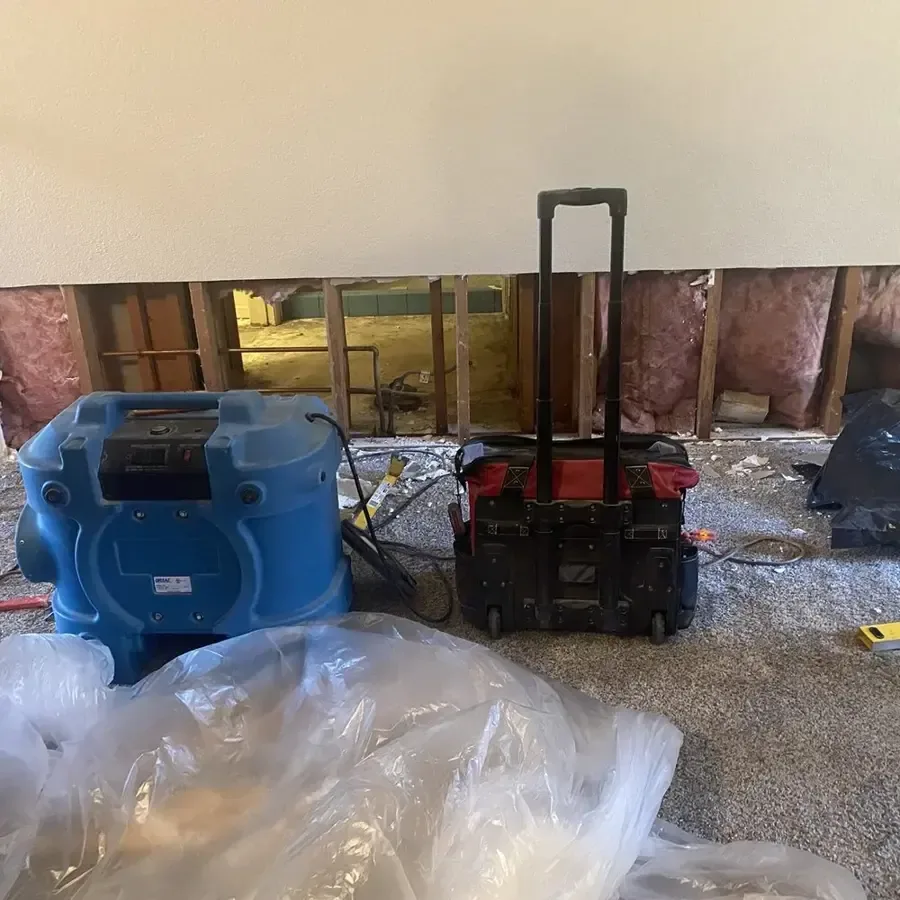
Air movers and dehumidifiers address the wet cavity while the drying team compares readings at joists, wall tops and remaining drywall edges.
- 04
Confirm closure conditions
The final assessment documents drying goals and material condition before reconstruction replaces insulation or ceiling finishes and hides the inspected assembly again.
Ceiling leak paths across concealed materials
Ceiling cleanup covers the Duckwood Road area, homes near Hanson Nature Park and properties reached from Highway 16. Inside the building, the assessor inspects the room above or the accessible attic to trace the water path. The contractor evaluates overhead framing, insulation and fixtures before choosing where to open the finish.
- Wet insulation can hold moisture against framing above an apparently small stain.
- Light fixtures and ceiling fans require electrical assessment when water enters their connections.
- A ceiling cavity can pass water into the top of an adjoining partition.
- The floor below needs checking when drips have reached carpet, furniture or storage.
At a property near Hanson Nature Park, the initial ceiling report should identify the room above and any fixture use before the stain appeared.
Ceiling leak safety before material removal
A bulging or sagging ceiling is not a safe place for a household repair attempt. Residents should keep clear of the area below and avoid puncturing the surface to drain it. Water may contact wiring or loosen material beyond the visible bulge. The Ready.gov planning information supports arranging emergency contacts before an unsafe condition develops. The contractor first establishes safe electrical and structural conditions, then selects controlled removal that does not expose occupants to falling saturated debris.
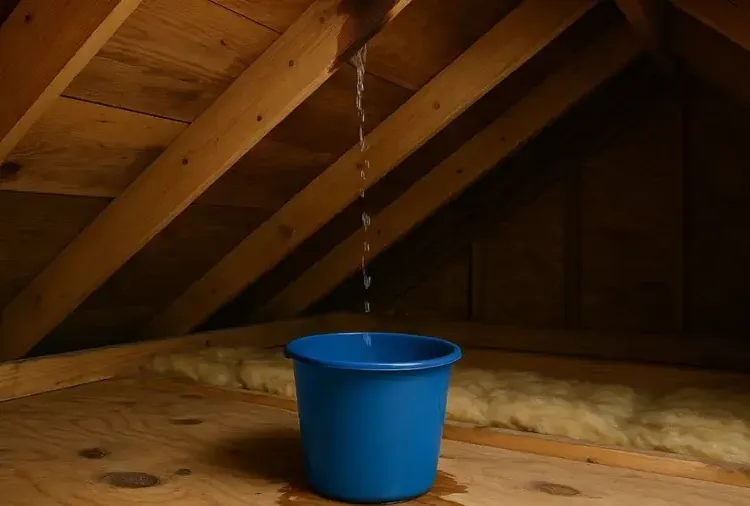
Photos taken from outside the hazard area preserve the original damage pattern. Moving a bucket beneath an unstable ceiling is not worth entering the fall zone.
For access from Duckwood Road, the crew also needs to know which entrance avoids the room under the saturated ceiling.
Ceiling cavity drying before the finish returns
After source control, the drying team determines which materials can remain and which prevent access to retained moisture. Air movement and dehumidification reach exposed framing, with moisture checks tracking the concealed layers above the painted face. The EPA flooded-home cleanup information reinforces timely attention to wet materials.
The moisture record identifies the checked joists, wall tops and remaining finish edges. A contractor compares repeat readings before closing the cavity. Paint can hide a stain, but it cannot demonstrate that wet insulation or framing has dried, so cosmetic work follows the material assessment rather than replacing it.
A Highway 16 approach can orient the dispatch discussion while the inspection focuses on wet ceiling layers. Fountain Creek Nature Center is another local reference for locating the property; the technician checks actual overhead moisture before defining repairs.
Ceiling leak water damage service area
Service extends through ZIP 80817 and the Duckwood Road, Highway 85 and Highway 16 approaches. The intake details identify the affected building, safe access and water source before the restoration team plans equipment and removal.
Ceiling Leak Water Damage questions in Fountain, CO
Should a bulging ceiling be punctured?
No household puncture attempt is appropriate beneath unstable material or wet wiring. Keep the area clear and arrange professional assessment of electrical and structural conditions.
Does the leak always start over the stain?
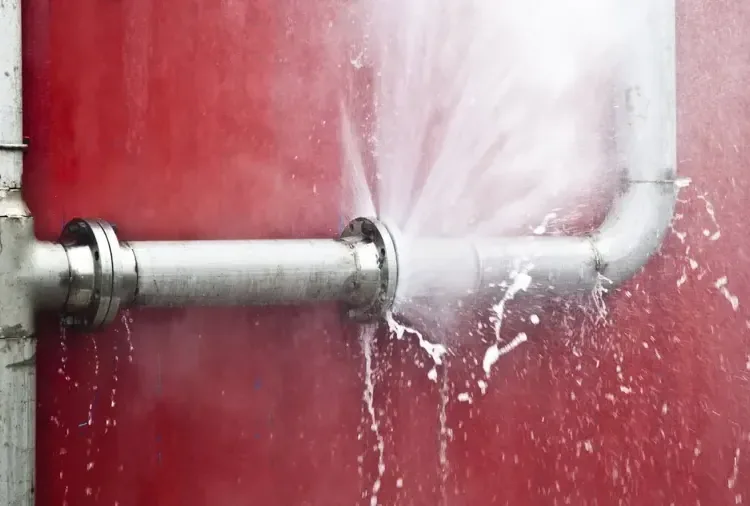
No. Water can follow framing or a pipe before appearing below. The inspection traces the route instead of treating the center of the stain as the source.
Can the ceiling dry without opening?
Some limited clean-water assemblies may dry in place. Saturated insulation, lost stability or inaccessible wet layers can make controlled removal necessary.
Why check the room below?
Dripping water can damage flooring and contents independently of the ceiling. Those materials may need extraction and drying even after the overhead source stops.
Will paint stop the water mark returning?
Paint does not control the source or remove concealed moisture. Source repair and verified drying should precede the cosmetic finish.
Is ceiling damage handled after hours?
24/7 dispatch supports an urgent damage report. The caller should describe sagging, wet fixtures and access restrictions so the response starts with the relevant hazards.
Related restoration services
Protect the room beneath the wet ceiling
The assessment traces concealed water and defines safe removal before the drying team measures the exposed assembly. 24/7 dispatch is available.