Pueblo West Hardwood Floor Water Damage
Raised board edges show a floor reacting to moisture, but the surface cannot describe every layer beneath it. Pueblo West hardwood assessment compares affected boards and substrates before choosing drying access, removal or later finish repairs.
(888) 532-8620Assess the wet wood floor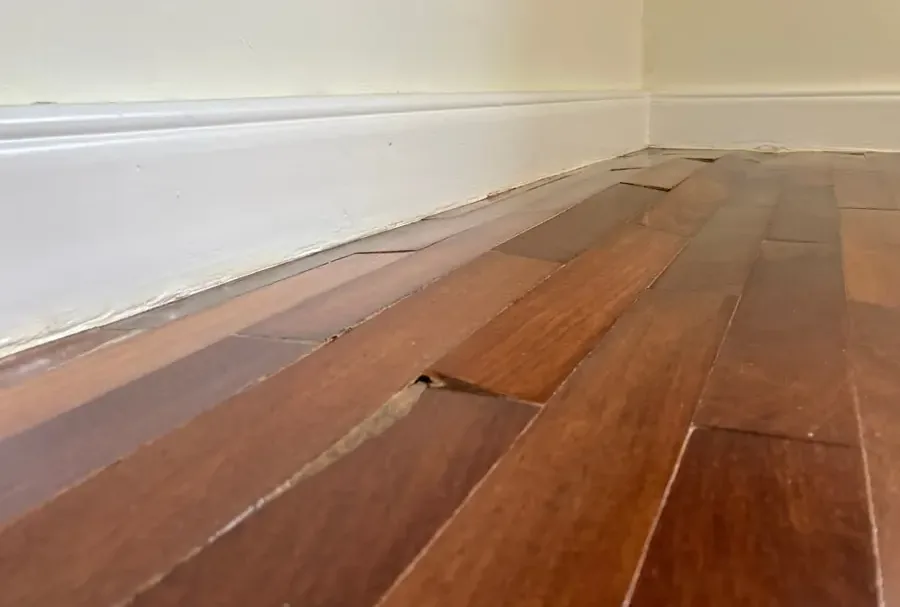
First steps for hardwood floor water damage
- Protect against unstable floor sections
Keep occupants away from lifted or loose boards and avoid shifting heavy furniture across the affected area while its stability and support conditions are being assessed.
- Record changes across the room
Note cupping, gaps and darkened seams, along with where the original leak appeared, so the moisture inspection can compare symptoms throughout the actual wet footprint.
- Find available product information
Share flooring descriptions or installation paperwork with the assessor when available, helping the repair discussion account for the material and layers actually present beneath the walking surface.
- Delay irreversible finish decisions
Discuss sanding or replacement after the source and moisture condition are evaluated, allowing board response and substrate access to shape the plan for restoring the finished floor.
A floor that feels uneven after a leak needs more than a decision about sanding. Water can remain below the boards while the exposed face starts to dry. Inspection should identify the floor product, the supporting layers and the direction of moisture spread before repairs commit the owner to keeping or replacing the assembly.
What does hardwood floor water damage cost in Pueblo West, CO?
Hardwood water damage costs in Pueblo West depend on board condition, contamination and access to the substrate. The estimate should identify extraction and drying separately from sanding, replacement material and installation needed after the moisture assessment is complete.
- Small board area
- Accessible floor edges
- Focused moisture comparisons
- Layered assembly checks
- Broader drying setup
- Repeat material measurements
- Damaged flooring removal
- Exposed substrate work
- Expanded replacement planning
Water category, affected area, material class and delay before drying change the scope.
Source correction and reconstruction may require separate agreements. These planning ranges are not quotes. Compare the inputs in the water damage cost calculator.
How the hardwood floor water damage work progresses
The IICRC S500 drying standard ties equipment decisions to material measurements. The project record tracks the source, removal choices, daily conditions and the final moisture comparison.
- 01
Identify the floor and exposure
Inspection records product characteristics, source history and movement, then establishes moisture comparisons across affected boards and suitable reference areas elsewhere in the accessible assembly.
- 02
Assess retention and hidden access
Water quality, material condition and the ability to reach the substrate shape removal decisions, with the owner informed before openings change the amount of flooring retained.
- 03
Monitor the layered drying response
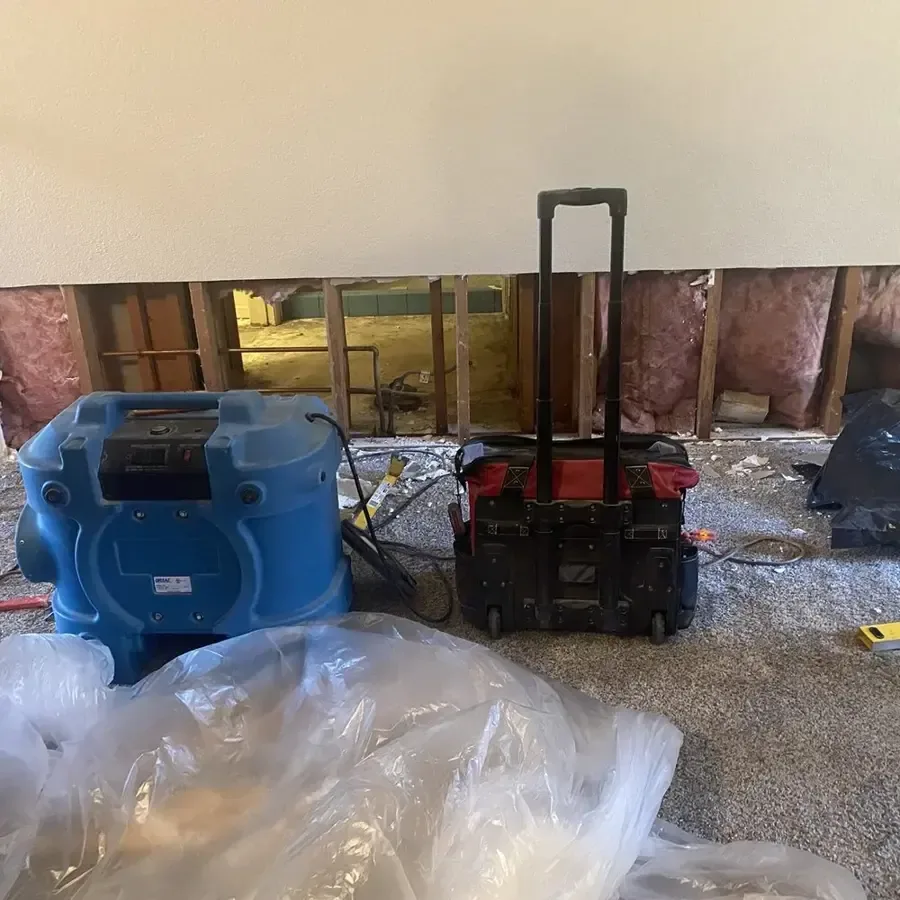
Equipment addresses accessible wet materials while readings track boards and supporting layers, helping reveal uneven progress that a dry looking surface alone would leave unnoticed.
- 04
Hand off measured conditions for repairs
The flooring discussion uses the drying record and remaining physical damage to decide whether refinishing, selected replacement or a broader installation scope is appropriate for the affected room.
Read movement alongside moisture measurements
Cupping, separated seams and lifted sections can signal different degrees of change. The assessor should compare wet areas with appropriate unaffected material, record the source history and check the floor perimeter. Measurements give those visible symptoms context and help distinguish a drying decision from a later cosmetic repair decision.
- Keep traffic off unstable or lifted boards that could shift or create a trip hazard.
- Record where distortion first appeared relative to the leak and any nearby cabinet bases.
- Provide available flooring product information so the assessment accounts for the actual installed assembly.
- Avoid early sanding that removes material before the moisture condition and board movement settle.
Consider the floor under the finish
Desert Hawk Golf Course, Prairie Winds Elementary School and U.S. Route 50 help describe locations within Pueblo West. At the property itself, inspection must establish whether the wet boards sit over concrete, wood or another layered assembly. That construction determines where moisture can remain trapped and how access might be created. A flooring edge, adjoining opening or selected removal area may reveal more than the exposed walking surface about the drying work still required.
Pueblo County requires residential building permits for interior remodels. If the eventual repair becomes a broader remodeling project, the reconstruction provider should address its permit scope separately from the floor drying assessment.
Choose retention before choosing the finish
Water source and exposure affect whether boards can remain. Contamination, severe movement or inaccessible wet layers can make removal necessary. Where retention is practical, controlled drying and repeat measurements help track both the boards and substrate, with equipment adjusted to the assembly rather than a fixed cosmetic deadline.
For moisture coming from below the floor, slab related damage assessment may be relevant. Once the source is corrected and drying results are reviewed, the owner can discuss sanding, isolated repair or replacement with the flooring provider using a documented picture of the affected materials.
Hardwood floor water damage service area
Hardwood damage assessments serve Pueblo West and ZIP 81007, including properties near Desert Sage Elementary School. Describe board movement, the original leak and any known flooring layers when discussing the room's water exposure and repair needs.
The same service nearby: hardwood floor water damage in Fountain, Security-Widefield, Stratmoor.
Water damage restoration in Pueblo West · every town covered
Hardwood Floor Water Damage questions in Pueblo West, CO
Should cupped boards be sanded immediately?
No. Moisture and movement should be assessed first. Early sanding can remove material before the floor's response to drying is understood.
Can boards look dry while the substrate stays wet?
Yes. Different layers can dry at different rates, making measurements beneath or along accessible edges important to the overall retention decision.
Does every wet wood floor need replacement?
Retention depends on contamination, damage and drying access. An inspection should explain the condition of the actual assembly before recommending removal.
Can furniture remain on the affected boards?
Placement depends on safety and drying access. Heavy contents may need assessed movement to expose moisture without damaging unstable sections of the floor.
Why are unaffected areas measured?
Suitable reference areas help interpret the wet floor's condition and drying response, alongside material characteristics and the history of the water exposure.
When should refinishing be discussed?
After source correction and assessment of the drying results. Remaining surface damage and board stability then provide a clearer basis for finish repair decisions.
Make the next floor decision with measurements
Arrange assessment of the wet assembly and its drying access before sanding or replacement work commits the room to a particular repair approach.