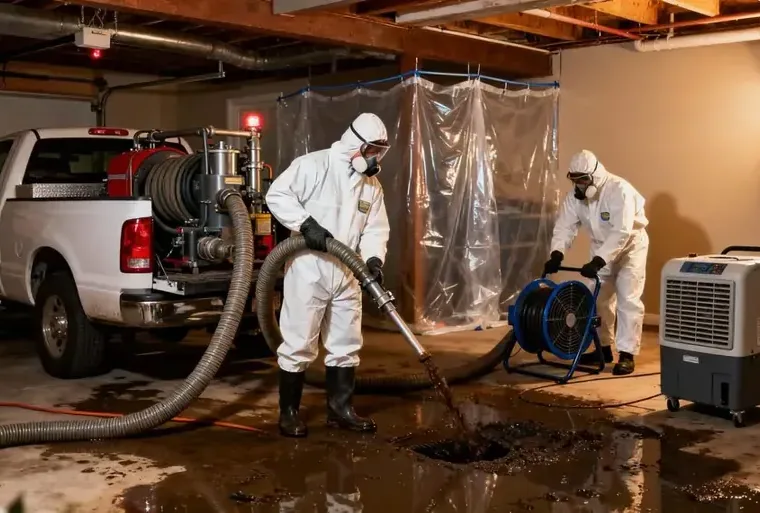
A drain backup in Fountain changes the household routine immediately. The local sanitation advice starts with stopping drain use, reporting the backup to the utility and asking whether neighbors are affected. Those observations help organize the response while the owner arranges help for wastewater inside the building and keeps people away from the affected rooms.
Key takeaways
- Pause activities that send water into the drainage system, including laundry and dishwashing.
- Give the utility a clear description of the affected fixtures and any neighboring symptoms.
- Keep household traffic outside rooms with wastewater on floors or furnishings.
- Photograph damage from a dry position and preserve the sequence of events.
- Coordinate drain correction, sewage removal and material drying as separate parts of the recovery.
A quiet bathroom can still receive more wastewater
An overflowing drain may stop rising when a fixture finishes emptying, leaving the room briefly still. That pause is a reason to keep water use suspended while the drainage problem is checked.
A new appliance cycle or another fixture draining adds another discharge for the obstructed system to handle.
The sanitation advice applies to the household as a whole. An owner can notify occupants that showers, sinks, toilets and appliances should remain unused until the backup has been addressed.
In a shared home, a visible notice helps prevent someone in an unaffected room from restarting normal activities.
The initial message to a cleanup provider should describe wastewater appearing indoors, the rooms involved and whether discharge is continuing. Sewage backup cleanup can then be planned around the actual affected surfaces and access, alongside the work needed to restore drainage.
- Record the fixture where water first appeared.
- Note which household activity was running at the time.
- Tell other occupants that drain use has stopped.
- Keep children and pets outside the wet area.
A useful utility report begins with observations
Fountain sanitation guidance asks residents to report backups and ask whether neighbors have the same problem. An owner can give the utility the time the backup was noticed, the fixtures affected and any information already received from neighboring households.
Direct observations are more useful than a guessed underground cause.
A neighbor may describe a slow drain, a full tub or no visible problem. Those answers should stay separate in the incident notes, because they describe different conditions.
The utility can evaluate the report while a plumbing professional investigates the drainage serving the affected building.
A callback record also matters when several people are helping. The owner can write down which organization received the report, the reported symptoms and the next instruction.
That gives the plumber and cleanup team the same starting information without relying on messages passed from memory.
Keep the clean rooms usable
Once wastewater reaches a floor, the movement of people and possessions deserves attention. A household can designate a dry route between unaffected rooms and keep shoes, cleaning tools and wet belongings out of that route.
Large furniture should remain in place until a professional assesses how it can be handled.
A doorway provides a practical place to describe the visible spread in photographs. The image can show the room beyond the threshold, the floor transition and any belongings at the edge.
An owner should stay on the dry side rather than enter the affected space to obtain a closer picture.
A bathroom spill may involve a hallway, closet or adjoining room by the time it is discovered. The cleanup scope should identify each affected space individually, including surfaces hidden behind movable objects.
This gives the household a clearer picture of which areas need restricted access and which remain available.
- Choose a dry household passage before moving belongings.
- Identify furniture that blocks the inspection route.
- Keep wet cleaning equipment away from unaffected flooring.
- Photograph the spread across doorways from outside the wet area.
Drain correction and indoor cleanup have different jobs
The plumbing assessment addresses why wastewater returned through the fixtures. The indoor cleanup assessment addresses the water and materials left behind.
An owner should receive a description of both assignments, especially when the drain starts working before the room has been cleaned and assessed.
Water extraction concerns the liquid present in the building and the access needed to remove it. A sewage incident also requires material decisions that account for the water condition.
The work proposal should make those decisions understandable room by room, including what will be removed and what will remain.
Coordination becomes particularly useful around fixed cabinets and enclosed plumbing. The plumber may need access to the pipe while cleanup personnel need access to the wet area around it.
Before finishes are disturbed, photographs and a short explanation of each opening help the owner follow why the work is necessary.
Household contents need an organized record
A damaged item list is easier to maintain when it follows the room layout. The owner can start with photographs already taken safely, then add descriptions as the cleanup assessment proceeds.
Keeping the original image files preserves a clearer record than relying only on cropped pictures sent in messages.
An item may be wet, visibly soiled or simply located beside the affected area. Those conditions should be described separately when the list is prepared.
Decisions about cleaning or disposal can then be attached to the specific item instead of treating every possession in the room as identical.
Local sanitation information notes that coverage depends on policy terms. An owner can request claim instructions from the insurer and keep those instructions alongside the incident records.
Cleanup invoices, plumbing findings and photographs each answer a different question about what happened and how the household responded.
- Label photographs with their room and subject.
- List portable possessions separately from building finishes.
- Record the reason given for each disposal decision.
- Keep the insurer's requests with the claim correspondence.
Retained materials need their own drying plan
Removing wastewater makes the floor easier to inspect, but the remaining assembly still needs assessment. The cleanup team should explain which wall bases, flooring layers or adjoining surfaces require attention.
A record of the retained materials gives the drying work a defined scope after the initial removal is complete.
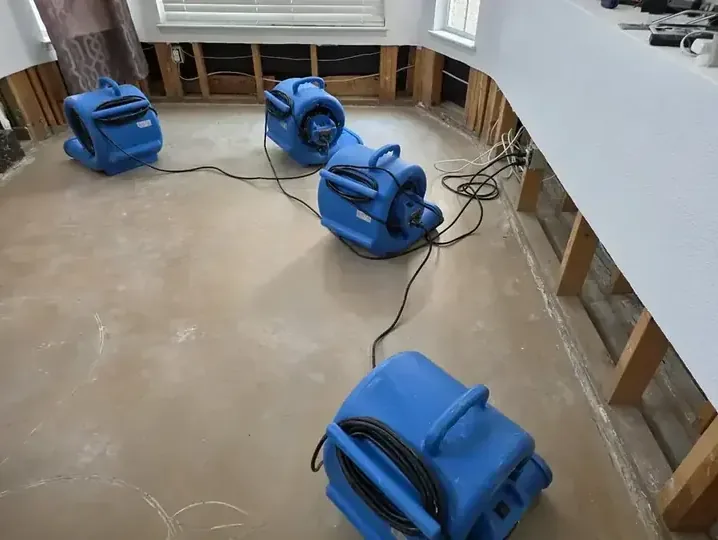
The structural drying process follows the condition of those materials. The owner can ask where readings will be taken, how changes will be tracked and what finding will support completion.
Those questions keep the focus on the building rather than the number of machines visible in the room.
Reconstruction planning can begin while the drying record develops. Finish selections and access arrangements are useful early decisions, but closure should follow the documented condition of the area being repaired.
A clear handoff identifies surfaces left open and tells the repair contractor which materials have been evaluated.
Resume normal use with a clear handoff
The household needs practical instructions before returning to its usual routine. The plumbing contractor should explain when drainage can be used again and any remaining service work.
The cleanup provider should separately identify spaces ready for access, equipment that must remain undisturbed and unfinished material repairs.
A short completion record can bring those instructions together without merging the responsibilities. It can contain the source finding, affected rooms, cleanup decisions, drying results and pending reconstruction.
The owner then has a usable reference if another contractor joins the project after the immediate disruption has passed.
In Fountain, the initial sanitation advice is simple enough to prepare for before an incident. Keeping utility account information and household contacts accessible helps an owner report a problem promptly.
During an actual backup, the report should still follow the symptoms present at that time rather than an earlier experience.
Questions
What should an owner say when reporting a backup?
A useful report identifies the overflowing fixtures, whether water is still entering and whether neighboring households have reported similar trouble. The owner can also describe any drain use that preceded the first visible return.
Can laundry continue in an unaffected room?
The local response advice calls for stopping drain use during the backup. A washing machine discharge belongs in that pause even when the laundry room itself remains dry.
Who decides whether damaged possessions can stay?
The cleanup assessment should address the condition of each item and explain the proposed handling. The owner can keep that recommendation with photographs and any insurer instructions before the item leaves the property.
What paperwork helps after the immediate cleanup?
The most useful handoff connects the plumbing diagnosis with the room photographs, material decisions and drying record. Outstanding repairs should be listed clearly so the next contractor can plan the remaining work.