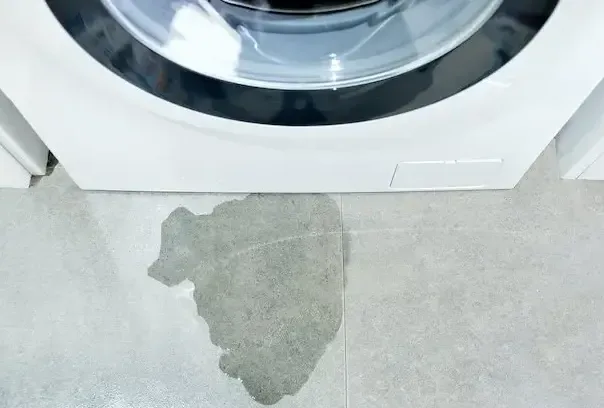
A wet laundry room in Colorado Springs can leave the owner looking at the washer while the important clue is at a connection, discharge point or another fixture. The local utility recommends regular washer lint trap cleaning and assigns private wastewater service pipe maintenance to customers. Careful observations help a professional separate appliance work from drainage work and organize the cleanup around the water that escaped.
Key takeaways
- Pause the appliance and avoid operating wet electrical controls.
- Describe where water appeared and which part of the wash cycle was underway.
- Include other fixture symptoms in the plumbing report.
- Arrange access behind the appliance through the responding professionals.
- Document the floor and wall materials reached before the washer is returned to position.
The point where water appeared is a useful first clue
A report that says only the washer leaked leaves several questions unanswered. The owner can describe whether water was seen at the supply connections, near the discharge opening or spreading from beneath the appliance.
Those observations give the service professional a more useful starting point without requiring the owner to move wet equipment.
The appliance cycle also belongs in the account. Water noticed during filling, washing or discharge gives the inspection a sequence to evaluate.
If the owner found the room after the cycle ended, that discovery should be recorded as such, with any earlier observations kept separate.
Appliance water damage cleanup follows the escaped water while the responsible professional evaluates the machine and plumbing. The initial request should identify wet flooring, nearby cabinets and whether the room can be reached safely.
A wider photograph from a dry position can explain the arrangement before anything is moved.
A laundry problem may include symptoms elsewhere
Colorado Springs Utilities explains that most wastewater backups occur in private service pipes. The owner should report any water returning through another fixture when describing a washer related discharge problem.
A tub or floor drain behaving unusually can be relevant to the plumbing assessment even if the laundry room received the first attention.
The utility's maintenance information also identifies roots as a possible cause of underground wastewater pipe blockages. The plumbing professional should determine the condition at the property and record the findings.
The household's contribution is a clear account of what happened at the fixtures and when it happened.
An owner can collect observations from other occupants without running another appliance cycle to recreate the problem. A written sequence of slow drainage, visible return water and the washer's activity preserves the details.
That information can help the professional plan an inspection of the drainage serving the building.
- Describe unusual water at fixtures outside the laundry room.
- Record whether slow drainage occurred before the overflow.
- Keep occupants' observations in the order they occurred.
- Leave repeated operation for the professional assessing the cause.
Access behind the machine requires coordination
A washer can conceal the wettest part of the floor and the condition of nearby wall bases. Moving it should be planned around connections, electrical safety and the floor beneath it.
The owner can point out the appliance arrangement and access obstacles while leaving the handling to the appropriate professionals.
Before movement, photographs should show the machine, hoses, discharge arrangement and adjoining finishes as they were found. After movement, the newly exposed surfaces can be documented.
The paired views connect the source investigation with the material assessment instead of leaving the room history dependent on memory.
Water removal may extend beyond the appliance position to the path across the laundry floor or through a doorway. The scope should identify those locations individually.
This gives the owner a clear explanation when the cleanup area is larger than the space normally occupied by the washer.
- Keep a room view showing the appliance before it moves.
- Identify storage or cabinetry limiting access.
- Request photographs of the newly exposed floor.
- Mark the visible water path into adjoining spaces.
Water condition influences the material assessment
The cleanup team needs the source findings from the appliance or plumbing assessment. A supply connection release and wastewater returning through a drain describe different water routes.
The record should state the finding and explain how it affects the handling proposed for flooring, nearby belongings and wall finishes.
A laundry room may contain absorbent storage items close to the machine. The owner can list those possessions while the team assesses their condition.
Items moved solely to reach the floor should be identified separately from belongings that became wet or visibly soiled during the overflow.
The proposed treatment should be explained for the materials actually present. An owner can ask which finishes will remain, which need removal and how concealed surfaces will be reached.
A specific explanation helps avoid confusion when the appliance repair ends before the surrounding room work is complete.
Lint and drain habits belong in the maintenance plan
The local utility recommends cleaning washer lint traps regularly. The appliance's maintenance instructions can help the owner identify the appropriate task for the installed machine.
After the incident is resolved, the owner can keep a maintenance note with the model information and service records.
Utility advice also includes keeping liquid grease out of drains and using strainers for hair and soap. These household habits relate to the drainage system beyond the laundry room.
Sharing them with occupants can support a more consistent routine where several people use the same plumbing.
The utility recommends professional service pipe cleaning every two years and notes that older neighborhoods with large trees may need more frequent attention. The property owner can discuss the actual drain condition and maintenance history with the plumbing professional.
The resulting plan should reflect the building and the findings from its inspection.
- Keep washer maintenance instructions accessible to the household.
- Record lint trap attention with other appliance maintenance.
- Save drain inspection and cleaning records together.
- Ask the plumber to explain the proposed service schedule.
The room needs a handoff before normal laundry resumes
An appliance repair can restore the machine while the room remains part of a cleanup project. The owner should receive clear instructions about appliance use, access and equipment around the wet surfaces.
Those instructions should account for any ongoing material work behind the machine or beside its connections.
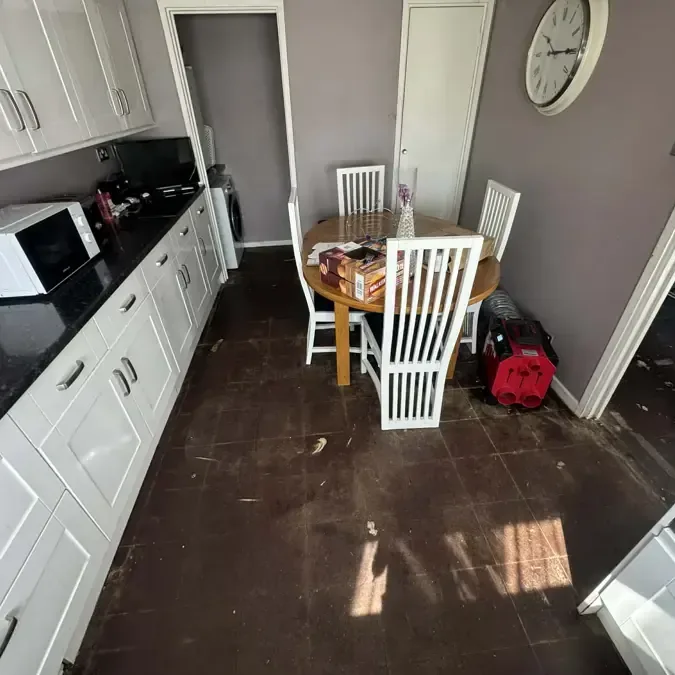
Structural drying should identify the retained floor and wall materials being assessed. The team can show the locations used for progress checks and explain when the area is ready for the next repair task.
The owner then has a material record instead of relying on the room's appearance.
The final appliance position should be coordinated with any unfinished flooring or trim repair. Leaving the work area accessible until those tasks are complete can prevent repeated appliance movement.
The repair contractor should know which surfaces were exposed and what remains to be restored around the installation.
A useful record connects cause, cleanup and maintenance
The source finding should describe whether the work involved the appliance, its immediate connections or the drainage serving the property. The cleanup record should show the water path and material decisions.
Together, those descriptions explain why several assignments may have been needed for the same laundry room incident.
If a wastewater claim is involved, the utility advises reporting it to the insurance company. Its documentation examples include a damaged personal property list with age, condition and estimated cash value.
The owner can keep the insurer's requested information alongside the room photographs and contractor findings.
For a Colorado Springs household, a completed file can also make future maintenance easier to arrange. The next service professional can review the previous diagnosis and see what was repaired or cleaned.
The owner benefits from a clear history of the machine and the drain without treating a new symptom as automatically identical to the earlier overflow.
Questions
What details help identify a washer overflow source?
The professional needs the observed water location, the appliance activity when it appeared and any symptoms at other fixtures. Photographs of the untouched installation can add context when the room is safe to view.
Who maintains the private wastewater service pipe?
The utility assigns maintenance of the pipe between the home and its main to the customer. A plumbing assessment can explain whether the reported laundry room problem involves that part of the system.
Does repairing the washer complete the room cleanup?
The appliance and the affected building materials have separate completion needs. The floor, wall edges and any wet possessions should receive their own assessment and handoff before the room returns to ordinary use.
What maintenance information should be saved?
The household should keep appliance instructions, service findings and drain cleaning records together. A dated note about the overflow symptoms helps a future professional compare a new complaint with the earlier incident.